

Why You’ll Love This Maple Glazed Roasted Parsnips
- They’re the ultimate upgrade. If you think you know roasted vegetables, these parsnips will be a delightful surprise. The glaze transforms them from simple to spectacular with very little extra effort.
- The perfect balance of sweet and savory. We’re not just making candy here. The maple syrup provides a beautiful sweetness, but it’s perfectly balanced by the sharpness of Dijon mustard, the warmth of garlic, and a subtle heat that lingers.
- Incredibly versatile. These parsnips are just as happy next to a roast chicken on a Tuesday as they are alongside a festive turkey. They pair wonderfully with so many main courses, making them a reliable go-to recipe.
- They look absolutely gorgeous. Let’s be honest, we eat with our eyes first. The glossy, caramelized finish on these golden-brown parsnips makes them look like they came from a professional kitchen, and that’s always a good feeling.
Ingredients & Tools
- 1.5 lbs (about 680 g) parsnips, peeled
- 2 tablespoons olive oil
- 1/2 teaspoon fine sea salt
- 1/4 teaspoon black pepper
- 3 tablespoons pure maple syrup
- 1 tablespoon Dijon mustard
- 2 cloves garlic, minced
- 1/4 teaspoon smoked paprika
- 1/8 teaspoon cayenne pepper or chili flakes (optional, for a hint of heat)
- 1 tablespoon fresh thyme leaves, plus more for garnish
Tools: A large baking sheet, parchment paper, a small bowl for mixing the glaze, a sharp knife, and a vegetable peeler.
The quality of your maple syrup really matters here—go for the real, pure stuff, not pancake syrup. Its deep, complex flavor is the soul of the glaze. And don’t skip the Dijon! It’s not there to make the parsnips taste like mustard, but to cut through the sweetness and add a wonderful depth.
Serves: 4 | Prep Time: 10 minutes | Cook Time: 30-35 minutes | Total Time: 45 minutes
Before You Start: Tips & Ingredient Notes
- Choosing your parsnips. Look for parsnips that are firm, not limp, and roughly similar in size so they cook evenly. Smaller to medium parsnips are often sweeter and more tender than giant, woody ones.
- To peel or not to peel? I highly recommend peeling. While parsnip skins are edible, they can be a bit tough and sometimes bitter. Peeling ensures a uniformly tender and sweet result.
- The magic of uniform cutting. This is the secret to perfect roasting! Try to cut all your parsnip pieces to a similar size and shape—I like to halve them lengthwise if they’re thick, then cut them into 3-inch batons. This way, nothing burns while you wait for the larger pieces to cook through.
- Don’t crowd the pan! This is the golden rule of roasting. If the parsnips are piled on top of each other, they’ll steam instead of roast. We want caramelization, which requires space. Use a large enough baking sheet.
How to Make Maple Glazed Roasted Parsnips
Step 1: First, get your oven nice and hot. Preheat it to 425°F (220°C). This high heat is crucial for getting those beautifully crisp edges. While it’s heating up, line your baking sheet with parchment paper—this makes cleanup an absolute dream and prevents any sticky glaze from welding itself to the pan.
Step 2: Now, prep your parsnips. Give them a good peel with your vegetable peeler. Slice off the tops and bottoms. The goal is to create even-sized pieces. If a parsnip is very thick at the top, slice it in half lengthwise first. Then, cut them all into batons about 3 inches long and 1/2 to 3/4-inch thick. Toss them onto the prepared baking sheet.
Step 3: Drizzle the parsnips with the olive oil and sprinkle with the salt and black pepper. Now, get your hands in there! Toss everything together until every piece is evenly coated. This hands-on method is the best way to ensure no parsnip is left behind. Spread them out in a single layer, giving each piece some personal space.
Step 4: Pop the tray into your preheated oven and roast for about 20 minutes. You’re looking for the parsnips to start becoming tender and getting some golden spots. They don’t need to be fully cooked yet—this first roast is about building a base of flavor and texture.
Step 5: While the parsnips are roasting, whisk together the glaze. In your small bowl, combine the maple syrup, Dijon mustard, minced garlic, smoked paprika, and cayenne pepper (if using). Whisk it until it’s smooth and well-combined. You’ll notice the aroma is just incredible—sweet, sharp, and savory all at once.
Step 6: After 20 minutes, carefully pull the baking sheet out of the oven. The parsnips should be sizzling. Pour the glaze mixture over the parsnips. Add the fresh thyme leaves. Now, toss everything again, gently but thoroughly, so the glaze envelops every single piece. It’s going to sizzle and smell amazing.
Step 7: Return the tray to the oven for the final 10-15 minutes. This is where the magic happens. The glaze will bubble, thicken, and caramelize. Keep a close eye during the last few minutes—you want a deep, glossy brown color but not blackened burns. They’re done when the parsnips are fork-tender and the glaze is sticky.
Step 8: Remove them from the oven and let them sit for a minute on the tray. They’ll be dangerously hot! Give them one final toss to coat them in any glaze that may have pooled on the pan. Transfer to a serving dish, garnish with a little extra fresh thyme, and serve immediately while they’re gloriously warm.
Serving Suggestions
Complementary Dishes
- Herb-Roasted Chicken or Turkey — The classic pairing. The savory, juicy meat is the perfect canvas for the sweet and sticky parsnips. They feel especially festive together.
- Pan-Seared Pork Chops or a Pork Tenderloin — Pork and sweet glazes are a match made in heaven. The parsnips will complement the mild flavor of the pork beautifully.
- A Creamy Lentil Shepherd’s Pie — For a vegetarian feast, these parsnips add a touch of elegance and sweetness to the hearty, savory filling of a lentil pie.
Drinks
- A Crisp Chardonnay or Pinot Gris — A white wine with a little body and acidity can cut through the sweetness of the glaze and cleanse the palate beautifully.
- A Malty Brown Ale or Amber Ale — The caramel notes in these beers will mirror the caramelized flavors on the parsnips, creating a really harmonious combination.
- Sparkling Apple Cider — The bubbles and sharp apple flavor are a non-alcoholic winner that brings a refreshing contrast to the rich vegetables.
Something Sweet
- A Simple Apple Galette — Staying with the autumn theme, a rustic, free-form apple tart feels like a natural and comforting progression after this meal.
- Dark Chocolate Pots de Crème — The deep, bitter notes of dark chocolate provide a sophisticated and decadent contrast to the sweet and savory main course.
- Gingerbread Cake with Lemon Glaze — The warm spices of gingerbread continue the cozy vibe, while the zesty lemon glaze adds a bright, refreshing finish.
Top Mistakes to Avoid
- Mistake: Using imitation maple syrup. The flavor will be flat, overly sweet, and lack the complexity that pure maple syrup brings. It’s the star ingredient, so it’s worth splurging on the real deal.
- Mistake: Adding the glaze at the beginning. If you mix the maple syrup in with the oil at the start, it will likely burn in the high heat before the parsnips have cooked through. Adding it halfway is the trick to a perfectly caramelized, not burnt, finish.
- Mistake: Cutting the parsnips unevenly. You’ll end up with some pieces mushy and overcooked while others are still hard. Taking a few extra minutes to cut them uniformly is the key to even cooking.
- Mistake: Overcrowding the baking sheet. I’ve messed this up before too… if the parsnips are too close, they steam and become soggy. For crisp edges, space is non-negotiable. Use two trays if you need to.
Expert Tips
- Tip: Add a pat of butter to the glaze. For an extra layer of richness and an even more luxurious gloss, whisk a tablespoon of softened butter into your maple-mustard mixture before tossing it with the parsnips. It’s a game-changer.
- Tip: Use the residual heat to wilt greens. As soon as you take the parsnips out of the oven, you can throw a couple of big handfuls of spinach or kale right onto the hot baking sheet. The residual heat will wilt them perfectly, and they’ll soak up any leftover glaze.
- Tip: Make them ahead for a dinner party. You can peel and cut the parsnips a day in advance; just keep them submerged in water in the fridge. The glaze can be mixed up to 3 days ahead. Then, it’s just a quick roast and toss before serving.
- Tip: Turn them into a hearty salad. Let the parsnips cool slightly, then toss them with some peppery arugula, crumbled goat cheese, and toasted walnuts for a fantastic warm salad that’s a meal in itself.
FAQs
Can I use other root vegetables with the parsnips?
Absolutely! This glaze is fantastic on carrots, sweet potatoes, or even a mix of root veggies. Just keep in mind that different vegetables have different cooking times. Denser vegetables like carrots might need a few extra minutes, while sweet potatoes cook faster. You might want to roast them separately at first and then combine them for the glazing stage to ensure everything is perfectly cooked.
How should I store and reheat leftovers?
Store any leftovers in an airtight container in the refrigerator for up to 3 days. To reheat, I strongly recommend using an oven or toaster oven at 375°F (190°C) for about 10 minutes, or until hot. This will help re-crisp the edges. The microwave will work in a pinch but will make them soft.
My glaze isn’t thickening/caramelizing. What did I do wrong?
This usually happens if the oven temperature is a bit low or the pan is too crowded. The high heat is necessary for the water in the syrup to evaporate, leaving the sugars to caramelize. Make sure your oven is fully preheated and that the parsnips are in a single layer. If it’s still not working, you can pop them under the broiler for a minute or two at the very end—but watch them like a hawk!
Can I make this recipe vegan?
It’s already vegan as written! Just double-check that your Dijon mustard doesn’t contain any hidden non-vegan ingredients (some brands use white wine that may not be vegan-friendly). The olive oil and maple syrup are plant-based, making this a wonderfully easy and inclusive side dish.
Is the cayenne pepper very spicy?
Not at all! A mere 1/8 teaspoon (or a pinch) of cayenne or chili flakes doesn’t add noticeable heat, but rather a subtle, warm background note that balances the sweetness. It’s more about depth of flavor than spice. If you’re sensitive to heat, you can absolutely leave it out without any problem.
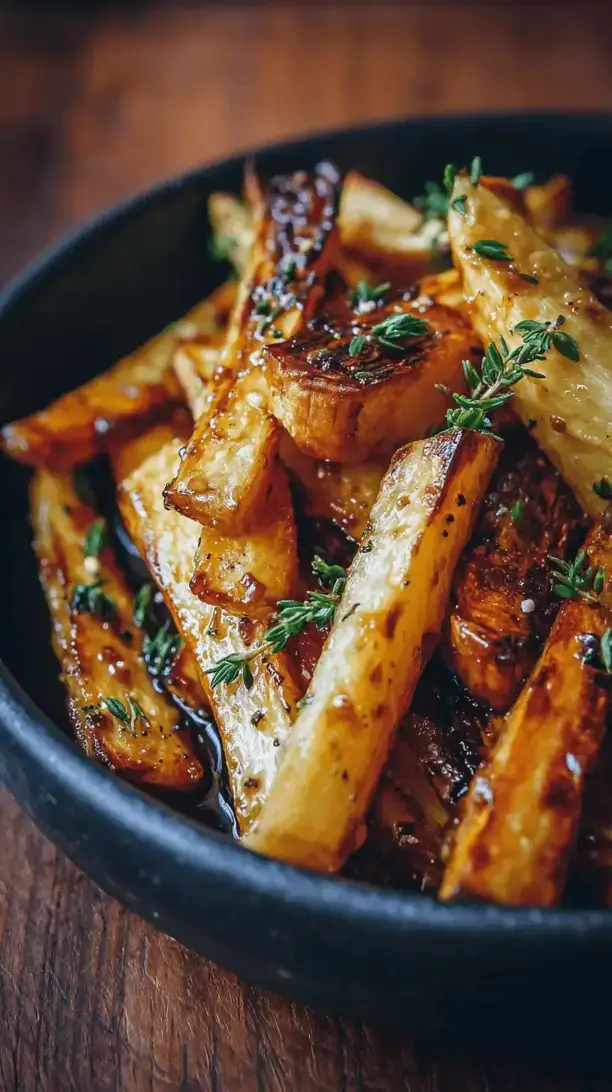
Maple Glazed Roasted Parsnips
Transform humble parsnips into a show-stopping side dish! My Maple Glazed Roasted Parsnips are sweet, savory & caramelized to perfection. Easy recipe for weeknights or holidays.
Ingredients
Ingredients
-
1.5 lbs parsnips (peeled (about 680 g))
-
2 tablespoons olive oil
-
0.5 teaspoon fine sea salt
-
0.25 teaspoon black pepper
-
3 tablespoons pure maple syrup
-
1 tablespoon Dijon mustard
-
2 cloves garlic (minced)
-
0.25 teaspoon smoked paprika
-
0.125 teaspoon cayenne pepper or chili flakes (optional, for a hint of heat)
-
1 tablespoon fresh thyme leaves (plus more for garnish)
Instructions
-
First, get your oven nice and hot. Preheat it to 425°F (220°C). This high heat is crucial for getting those beautifully crisp edges. While it's heating up, line your baking sheet with parchment paper—this makes cleanup an absolute dream and prevents any sticky glaze from welding itself to the pan.01
-
Now, prep your parsnips. Give them a good peel with your vegetable peeler. Slice off the tops and bottoms. The goal is to create even-sized pieces. If a parsnip is very thick at the top, slice it in half lengthwise first. Then, cut them all into batons about 3 inches long and 1/2 to 3/4-inch thick. Toss them onto the prepared baking sheet.02
-
Drizzle the parsnips with the olive oil and sprinkle with the salt and black pepper. Now, get your hands in there! Toss everything together until every piece is evenly coated. This hands-on method is the best way to ensure no parsnip is left behind. Spread them out in a single layer, giving each piece some personal space.03
-
Pop the tray into your preheated oven and roast for about 20 minutes. You're looking for the parsnips to start becoming tender and getting some golden spots. They don't need to be fully cooked yet—this first roast is about building a base of flavor and texture.04
-
While the parsnips are roasting, whisk together the glaze. In your small bowl, combine the maple syrup, Dijon mustard, minced garlic, smoked paprika, and cayenne pepper (if using). Whisk it until it's smooth and well-combined. You'll notice the aroma is just incredible—sweet, sharp, and savory all at once.05
-
After 20 minutes, carefully pull the baking sheet out of the oven. The parsnips should be sizzling. Pour the glaze mixture over the parsnips. Add the fresh thyme leaves. Now, toss everything again, gently but thoroughly, so the glaze envelops every single piece. It's going to sizzle and smell amazing.06
-
Return the tray to the oven for the final 10-15 minutes. This is where the magic happens. The glaze will bubble, thicken, and caramelize. Keep a close eye during the last few minutes—you want a deep, glossy brown color but not blackened burns. They're done when the parsnips are fork-tender and the glaze is sticky.07
-
Remove them from the oven and let them sit for a minute on the tray. They'll be dangerously hot! Give them one final toss to coat them in any glaze that may have pooled on the pan. Transfer to a serving dish, garnish with a little extra fresh thyme, and serve immediately while they're gloriously warm.08


