

Why You’ll Love This Butternut Squash and Sage Risotto
- It’s the ultimate comfort food with a gourmet twist. Risotto is inherently creamy and satisfying, but the combination of sweet squash and fragrant sage elevates it from simple to spectacular. It feels like a restaurant-quality meal you’ve made with your own two hands.
- The colors are absolutely stunning. The vibrant orange of the squash puree mixed with the white rice and flecks of green sage creates a dish that’s as beautiful on the table as it is delicious in the bowl. It’s a feast for the eyes before it even hits your taste buds.
- It’s surprisingly versatile. You can make it completely vegetarian with vegetable broth, or add a sprinkle of crispy pancetta for a salty, savory punch. It’s a fantastic base recipe that you can adapt based on what you have in your pantry.
- The process is genuinely therapeutic. In a world of quick meals, taking 30 minutes to stand by the stove and stir is a form of kitchen meditation. You’ll notice the gradual change in texture and aroma, which makes the final result even more rewarding.
Ingredients & Tools
- 1 medium butternut squash (about 1.2 kg / 2.5 lbs), peeled, seeded, and cubed into 2cm chunks
- 2 tbsp olive oil, divided
- 1 large onion, finely chopped
- 2 cloves garlic, minced
- 300 g Arborio rice
- 125 ml dry white wine (like Pinot Grigio or Sauvignon Blanc)
- 1.5 litres hot vegetable or chicken broth, kept on a low simmer
- 15-20 fresh sage leaves, plus more for garnish
- 50 g unsalted butter, cold and cubed
- 80 g freshly grated Parmesan cheese, plus more for serving
- To taste salt and freshly ground black pepper
- Optional: A pinch of freshly grated nutmeg
Tools: A large, heavy-bottomed pot or Dutch oven, a ladle, a wooden spoon, a baking sheet, and a blender or food processor (or a potato masher for a more rustic texture).
The real stars here are the squash and the sage, so don’t skimp on their quality. A good, flavorful broth is also non-negotiable—it’s what the rice cooks in, so it forms the foundation of the entire dish’s flavor. And that cold butter at the end? That’s the secret to the signature creamy gloss.
Serves: 4 as a main | Prep Time: 20 minutes | Cook Time: 40 minutes | Total Time: 60 minutes
Before You Start: Tips & Ingredient Notes
- Hot broth is non-negotiable. Adding cold broth to the rice will shock the grains and stop the cooking process, leading to a gritty, uneven risotto. Keep your broth simmering gently in a separate saucepan the entire time.
- Don’t rinse the rice. Arborio rice has a high starch content on its surface, which is exactly what we want. That starch is released during stirring and is what creates the creamy sauce. Rinsing it away would be a tragedy!
- Chop your squash evenly. Cutting the squash into similarly sized cubes ensures they roast at the same rate. Nobody wants a mix of mushy and undercooked squash in their final dish.
- Have everything prepped and within arm’s reach. This is called your *mise en place*. Once you start adding the broth, you’ll be stirring pretty consistently, so having your onion chopped, wine measured, and broth hot makes the process smooth and enjoyable, not frantic.
How to Make Butternut Squash and Sage Risotto
Step 1: Roast the Squash and Sage. Preheat your oven to 200°C (400°F). Toss the cubed butternut squash with 1 tablespoon of the olive oil, salt, and pepper on a baking sheet. Scatter about half of the sage leaves over the squash. Roast for 20-25 minutes, or until the squash is tender and caramelized at the edges. You’ll know it’s ready when you can easily pierce a cube with a fork. Set aside about a third of the roasted squash for garnish. Place the remaining two-thirds (along with any roasted sage) into a blender with a splash of the hot broth and blend until completely smooth. This puree is our golden ticket to creamy, flavorful rice.
Step 2: Sauté the Aromatics. While the squash roasts, heat the remaining 1 tablespoon of olive oil in your large pot over medium heat. Add the chopped onion and a pinch of salt. Cook, stirring occasionally, for about 5-7 minutes until the onion is soft and translucent but not browned. Stir in the minced garlic and cook for just another minute until fragrant—you don’t want the garlic to burn, as it will turn bitter.
Step 3: Toast the Rice. Add the Arborio rice to the pot. Stir constantly for 2-3 minutes until the edges of the rice grains look slightly translucent. You might hear a faint clicking sound as they toast. This step is crucial for sealing the grain, which helps it absorb the liquid gradually and stay al dente.
Step 4: Deglaze with Wine. Pour in the white wine. It will sizzle and steam dramatically—that’s a good sign! Stir continuously until the wine is fully absorbed by the rice. The alcohol will cook off, leaving behind a lovely acidic backbone that balances the sweetness of the squash.
Step 5: The Main Event – Adding the Broth. Now, begin adding the hot broth, one ladleful at a time. The trick is to wait until each addition is almost fully absorbed before adding the next. Stir frequently but not necessarily constantly; just don’t leave it unattended for long. This slow addition is what coaxes the starch out of the rice. You’ll notice the mixture becoming creamier with each addition. This process should take about 18-20 minutes.
Step 6: Incorporate the Squash Puree. When the rice is almost done—it should be tender but still have a slight bite (al dente)—stir in the butternut squash puree. Let it heat through for a minute. The color will transform instantly into a beautiful, sunny orange.
Step 7: The Final Touch – Mantecatura. This is the Italian term for the final stirring in of fat that makes risotto incredibly creamy. Turn off the heat. Stir in the cold, cubed butter and the grated Parmesan cheese. Beat it in vigorously—this emulsifies the fats into the risotto, creating a rich, velvety sauce that clings to the rice. Season generously with salt and pepper, and add that optional pinch of nutmeg if you like; it complements the squash beautifully.
Step 8: Serve Immediately. Risotto waits for no one! Divide among warm bowls, top with the reserved roasted squash cubes, a few fresh sage leaves (or you can quickly fry some in butter for a crispy garnish), and an extra sprinkle of Parmesan. Dive in while it’s gloriously creamy.
Serving Suggestions
Complementary Dishes
- A simple arugula salad with a lemon vinaigrette — The peppery bite of the arugula and the sharp acidity of the lemon cut through the richness of the risotto perfectly, cleansing the palate between bites.
- Pan-seared scallops or grilled chicken breast — For a more substantial meal, a simple protein on the side adds elegance without complicating the flavors. The delicate sweetness of scallops is a particularly fantastic pairing.
- Garlicky sautéed greens like kale or spinach — This adds a wonderful textural contrast and a boost of vibrant green color to the plate, making the meal feel even more balanced and wholesome.
Drinks
- A crisp, unoaked Chardonnay or Pinot Grigio — The same wine you used in the risotto will work beautifully here. You want something with enough acidity to stand up to the creaminess but that won’t overpower the delicate squash and sage.
- A dry hard cider — The apple notes in a good dry cider are a surprisingly delightful match for the autumnal flavors of the butternut squash. It’s a fun, less conventional pairing that really works.
- Sparkling water with a twist of lemon — For a non-alcoholic option, the bubbles and citrus are fantastic for resetting your taste buds, ensuring every mouthful of risotto tastes as amazing as the first.
Something Sweet
- Warm apple crumble with vanilla ice cream — Staying with the cozy autumn theme, a simple fruit dessert feels like the natural, comforting conclusion to this meal. The warm spices in the crumble echo the warmth of the sage.
- Dark chocolate and pear tart — The sophistication of dark chocolate and the subtle sweetness of pear provide a elegant, not-too-sweet finish that doesn’t feel heavy after the risotto.
- A simple bowl of fresh berries — Sometimes, after a rich meal, something light and fresh is all you need. Berries provide a juicy, bright endnote that is wonderfully satisfying.
Top Mistakes to Avoid
- Mistake: Using the wrong type of rice. Arborio is the most common, but Carnaroli or Vialone Nano are also great choices. These short-grain rices have the high starch content needed for creaminess. Long-grain rice like basmati or jasmine will not work—it will remain separate and grainy.
- Mistake: Adding all the broth at once. This is the cardinal sin of risotto! You’re essentially boiling the rice, which washes away the starch and gives you a soupy, sticky mess instead of a creamy, cohesive dish. Patience is key.
- Mistake: Overcooking the rice into mush. The rice should be *al dente*—soft on the outside with a tiny bit of resistance in the center. Keep tasting as you near the end of the cooking time. It continues to cook a little even after you turn off the heat.
- Mistake: Skipping the final butter and cheese step off the heat. This “mantecatura” is not optional if you want that restaurant-quality silkiness. Adding the fat at the end, off the heat, is what creates the signature creamy emulsion.
Expert Tips
- Tip: Use a wide, heavy-bottomed pot. A Dutch oven is perfect. The wide surface area allows the liquid to evaporate evenly, and the heavy base distributes heat consistently, preventing the rice at the bottom from scorching while the top remains undercooked.
- Tip: Taste your broth before you start. Since the rice absorbs the broth, it’s the primary source of seasoning. If your broth is undersalted, your risotto will be too. Adjust the saltiness of your broth until it tastes good on its own.
- Tip: For a deeper sage flavor, infuse the butter. Before starting, melt the butter you’ll use at the end in a small pan. Add a few sage leaves and cook over low heat for 2-3 minutes until fragrant. Strain out the leaves and let the butter solidify again before cubing it. This sage-infused butter will pack an incredible punch in the final step.
- Tip: Leftovers can be revived! Risotto is best fresh, but if you have leftovers, don’t just microwave it—it will become gluey. Reheat it gently in a pan with a small splash of broth or water, stirring constantly to bring back the creaminess.
FAQs
Can I make this risotto ahead of time?
You can do some prep ahead to save time, but I don’t recommend cooking the entire risotto in advance. The texture changes dramatically upon sitting and reheating. Instead, roast the squash and make the puree a day ahead. You can also chop your onion and measure out your rice and wine. When you’re ready to eat, you can start from Step 2 and have dinner on the table in about 25 minutes, which is still pretty quick!
I don’t have white wine. What can I use instead?
No problem! The wine adds acidity, so you’ll want to replace it with something similarly sharp. The juice of half a lemon added with the first ladle of broth is a great substitute. You could also use a tablespoon of white wine vinegar, but dilute it with a little water or extra broth so the acidity isn’t too overpowering right at the start.
Is it possible to make this recipe vegan?
Absolutely! Use vegetable broth and omit the butter and Parmesan. For the final “mantecatura,” use a generous tablespoon of a good olive oil or a vegan butter alternative. To replace the salty, umami kick of the Parmesan, you could stir in a tablespoon of nutritional yeast or a teaspoon of white miso paste at the end—it works wonders.
My risotto is too thick/too thin. How can I fix it?
If it’s too thick (stodgy), it just needs more liquid. Simply heat up a little more broth or even some hot water and stir it in until you reach your desired creamy consistency. If it’s too thin (soupy), just keep cooking it over low heat, stirring constantly. The excess liquid will evaporate, and the rice will continue to release starch, thickening the sauce. Remember, it will thicken slightly as it rests in the bowl, too.
Why is my risotto gluey or gummy?
This usually happens from over-stirring. While you need to stir frequently to release the starch, aggressive, constant stirring can break down the rice grains too much, releasing excess starch that makes the risotto glue-like. Aim for a gentle, frequent stir rather than a vigorous, constant one. Also, make sure you’re adding the broth gradually, as adding too much at once can cause the rice to swell and burst prematurely.
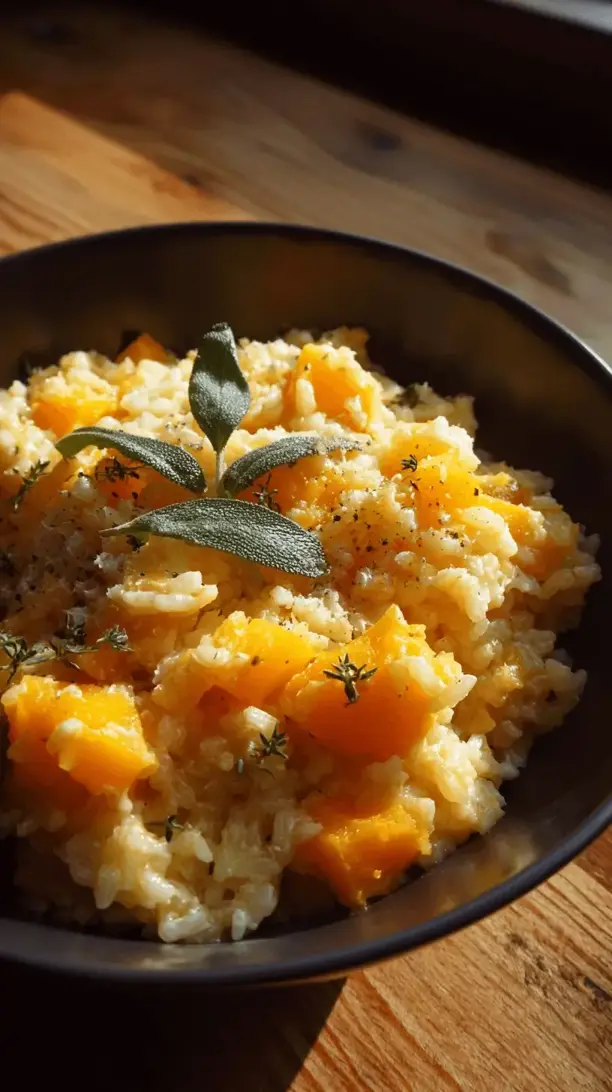
Butternut Squash And Sage Risotto
Creamy butternut squash & sage risotto recipe! A cozy, restaurant-quality meal perfect for fall. Easy step-by-step guide for the ultimate comfort food. Ready in 60 mins!
Ingredients
Ingredients
-
1 medium butternut squash (about 1.2 kg / 2.5 lbs, peeled, seeded, and cubed into 2cm chunks)
-
2 tbsp olive oil (divided)
-
1 large onion (finely chopped)
-
2 cloves garlic (minced)
-
300 g Arborio rice
-
125 ml dry white wine (like Pinot Grigio or Sauvignon Blanc)
-
1.5 litres hot vegetable or chicken broth (kept on a low simmer)
-
15-20 fresh sage leaves (plus more for garnish)
-
50 g unsalted butter (cold and cubed)
-
80 g freshly grated Parmesan cheese (plus more for serving)
-
to taste salt
-
to taste freshly ground black pepper
-
1 pinch freshly grated nutmeg (optional)
Instructions
-
Roast the Squash and Sage. Preheat your oven to 200°C (400°F). Toss the cubed butternut squash with 1 tablespoon of the olive oil, salt, and pepper on a baking sheet. Scatter about half of the sage leaves over the squash. Roast for 20-25 minutes, or until the squash is tender and caramelized at the edges. You'll know it's ready when you can easily pierce a cube with a fork. Set aside about a third of the roasted squash for garnish. Place the remaining two-thirds (along with any roasted sage) into a blender with a splash of the hot broth and blend until completely smooth. This puree is our golden ticket to creamy, flavorful rice.01
-
Sauté the Aromatics. While the squash roasts, heat the remaining 1 tablespoon of olive oil in your large pot over medium heat. Add the chopped onion and a pinch of salt. Cook, stirring occasionally, for about 5-7 minutes until the onion is soft and translucent but not browned. Stir in the minced garlic and cook for just another minute until fragrant—you don't want the garlic to burn, as it will turn bitter.02
-
Toast the Rice. Add the Arborio rice to the pot. Stir constantly for 2-3 minutes until the edges of the rice grains look slightly translucent. You might hear a faint clicking sound as they toast. This step is crucial for sealing the grain, which helps it absorb the liquid gradually and stay al dente.03
-
Deglaze with Wine. Pour in the white wine. It will sizzle and steam dramatically—that's a good sign! Stir continuously until the wine is fully absorbed by the rice. The alcohol will cook off, leaving behind a lovely acidic backbone that balances the sweetness of the squash.04
-
The Main Event – Adding the Broth. Now, begin adding the hot broth, one ladleful at a time. The trick is to wait until each addition is almost fully absorbed before adding the next. Stir frequently but not necessarily constantly; just don't leave it unattended for long. This slow addition is what coaxes the starch out of the rice. You'll notice the mixture becoming creamier with each addition. This process should take about 18-20 minutes.05
-
Incorporate the Squash Puree. When the rice is almost done—it should be tender but still have a slight bite (al dente)—stir in the butternut squash puree. Let it heat through for a minute. The color will transform instantly into a beautiful, sunny orange.06
-
The Final Touch – Mantecatura. This is the Italian term for the final stirring in of fat that makes risotto incredibly creamy. Turn off the heat. Stir in the cold, cubed butter and the grated Parmesan cheese. Beat it in vigorously—this emulsifies the fats into the risotto, creating a rich, velvety sauce that clings to the rice. Season generously with salt and pepper, and add that optional pinch of nutmeg if you like; it complements the squash beautifully.07
-
Serve Immediately. Risotto waits for no one! Divide among warm bowls, top with the reserved roasted squash cubes, a few fresh sage leaves (or you can quickly fry some in butter for a crispy garnish), and an extra sprinkle of Parmesan. Dive in while it's gloriously creamy.08


