

Why You’ll Love This Balsamic Roasted Carrots
- Effortless Elegance. With just a few minutes of active prep, you can create a side dish that looks and tastes like it came from a high-end restaurant. It’s the perfect way to impress guests without any stress.
- The Perfect Sweet-and-Savory Balance. The natural sweetness of the roasted carrots is beautifully cut by the tangy, slightly acidic balsamic glaze. It’s a flavor combination that just sings and complements so many main courses.
- Meal-Prep Friendly. These carrots are fantastic made ahead of time. You can roast them, let them cool, and then simply reheat them gently before serving. They also taste wonderful at room temperature, making them great for picnics or packed lunches.
- Incredibly Versatile. Once you master the basic recipe, the customization options are endless. Toss in some fresh herbs like thyme or rosemary, add a sprinkle of chili flakes for heat, or finish with crumbled goat cheese for a creamy contrast.
Ingredients & Tools
- 1.5 lbs carrots, preferably similar in thickness
- 2 tablespoons extra virgin olive oil
- 2 tablespoons good quality balsamic vinegar
- 1 tablespoon pure maple syrup or honey
- 2 cloves garlic, minced
- 1/2 teaspoon kosher salt, plus more to taste
- 1/4 teaspoon freshly cracked black pepper
- Optional for serving: fresh chopped parsley or thyme, flaky sea salt
Tools: A large rimmed baking sheet, parchment paper (for easy cleanup!), a sharp knife, and a small bowl for the glaze.
The quality of your balsamic vinegar really matters here—you don’t need to break the bank on a 50-year-aged bottle, but a decent, moderately-priced one will have a better flavor and glaze more effectively than a very cheap, overly acidic one. And using fresh garlic instead of powdered makes a world of difference, infusing the oil with so much aroma.
Serves: 4 | Prep Time: 10 minutes | Cook Time: 25-30 minutes | Total Time: 40 minutes
Before You Start: Tips & Ingredient Notes
- Carrot Size is Key. Try to select carrots that are roughly the same diameter. This ensures they all cook at the same rate, so you don’t end up with some pieces burnt and others still crunchy. If your carrots are very thick, you can slice them in half lengthwise.
- Don’t Skimp on the Oil. The olive oil isn’t just for preventing sticking; it helps conduct heat evenly, leading to that beautiful caramelization. If the carrots look dry, they’re more likely to steam than roast.
- To Peel or Not to Peel? Honestly, it’s up to you! If your carrots are organic and you give them a really good scrub, the skins are perfectly edible and add a nice texture. For a more refined look, go ahead and peel them.
- Understanding Your Balsamic. A thicker, sweeter balsamic will create a glaze more quickly. If yours is quite thin, you might need to reduce it slightly in a pan before using, or just be patient—it will still reduce beautifully in the oven’s heat.
How to Make Balsamic Roasted Carrots
Step 1: Prep the Carrots. Preheat your oven to 425°F (220°C). Line a large rimmed baking sheet with parchment paper for effortless cleanup. Scrub or peel your carrots. Now, you have a choice: you can leave smaller carrots whole, or slice larger ones on a diagonal into ½-inch to 1-inch thick pieces. The diagonal cut gives you more surface area for that delicious caramelization. Pat them completely dry with a kitchen towel—this is a small but important step for getting a good roast instead of a steam.
Step 2: Create the Flavor Base. In a large bowl, whisk together the olive oil, balsamic vinegar, maple syrup, minced garlic, salt, and pepper. You’ll notice the mixture might not fully emulsify, and that’s okay—it will all come together on the baking sheet. The smell at this stage is already incredible, a promise of the goodness to come.
Step 3: Coat and Arrange. Add the prepared carrots to the bowl and toss them thoroughly until every piece is evenly coated in the glossy marinade. I like to use my hands for this to make sure it’s all well distributed. Pour the carrots and any remaining liquid from the bowl onto your prepared baking sheet. Spread them out into a single, uncrowded layer. This is crucial! If the carrots are piled on top of each other, they’ll steam and become soggy. We want hot air to circulate freely for maximum browning.
Step 4: The First Roast. Place the baking sheet in the preheated oven and roast for 15 minutes. You’ll start to smell the wonderful aromas of garlic and caramelizing sugar. After 15 minutes, remove the sheet from the oven. The carrots should be starting to soften and you might see some browning around the edges.
Step 5: Toss and Glaze. This is the key moment! Carefully toss the carrots and rotate the pan. This ensures even cooking and browning on all sides. You’ll see the liquid on the pan has started to reduce. At this point, if you want an extra-glazy finish, you can drizzle another teaspoon of balsamic vinegar over the top.
Step 6: Finish Roasting. Return the pan to the oven for another 10-15 minutes. Keep a close eye on them during the final few minutes. You’re looking for the carrots to be tender enough to easily pierce with a fork and for the balsamic glaze to be bubbling and sticky, not burnt. The edges should be caramelized and deliciously dark in spots.
Step 7: The Final Touch. Once the carrots are perfectly roasted, take them out of the oven. Let them rest on the pan for a minute—they’ll continue to absorb the glaze. Taste one (carefully, it’s hot!) and adjust with a pinch more salt if needed. Transfer to a serving platter and finish with a sprinkle of fresh herbs like parsley or thyme and maybe a pinch of flaky sea salt for a final burst of flavor and texture.
Serving Suggestions
Complementary Dishes
- Roasted Chicken or Turkey — The classic, comforting pairing. The savory, juicy meat alongside the sweet and tangy carrots is a match made in heaven.
- Pan-Seared Pork Chops — The slight sweetness of pork loves the acidity of the balsamic. It creates a really well-rounded plate.
- Creamy Polenta or Mashed Potatoes — Serve the carrots and all their glorious glaze right on top. The creamy base soaks up the flavors beautifully.
Drinks
- A Crisp Rosé — The berry notes and bright acidity in a dry rosé complement the sweet and tangy profile of the carrots without overpowering them.
- A Pale Ale or IPA — The citrusy hops can cut through the richness of the glaze, making for a surprisingly refreshing combination.
- Sparkling Water with Lemon — A non-alcoholic option that cleanses the palate between bites, letting you appreciate the carrots’ flavor fully.
Something Sweet
- Dark Chocolate Pots de Crème — The deep, bitter notes of dark chocolate provide a sophisticated and rich contrast to the bright, sweet carrots.
- Lemon Sorbet — Incredibly light and refreshing, it acts as a palate cleanser and ends the meal on a zesty, clean note.
- Simple Shortbread Cookies — The buttery, crumbly texture and mild sweetness are a simple, comforting end that doesn’t compete with the main course.
Top Mistakes to Avoid
- Mistake: Crowding the Pan. This is the number one reason for soggy, steamed vegetables. If the carrots are too close together, they release moisture and can’t brown properly. Always use a large enough baking sheet to give them space.
- Mistake: Skipping the Midway Toss. That quick stir and pan rotation halfway through is non-negotiable. It ensures every piece gets evenly coated in the reducing glaze and browns on all sides, preventing burnt spots and undercooked patches.
- Mistake: Using a Thin, Cheap Balsamic. A very acidic, watery vinegar won’t reduce to a nice glaze and can leave an unpleasant sharp taste. A moderately-priced, slightly thicker balsamic makes all the difference.
- Mistake: Not Preheating the Oven. Starting with a hot oven is essential for that initial blast of heat that kicks off the caramelization process. Putting carrots in a cold oven will lead to uneven cooking.
Expert Tips
- Tip: Add Herbs at the End. If you’re using delicate fresh herbs like parsley, basil, or dill, stir them in after roasting. If you’re using hardier herbs like rosemary or thyme, you can toss them in with the carrots before roasting—their flavor stands up well to the heat.
- Tip: Make it a Sheet Pan Meal. Turn this into a complete dinner by adding your protein to the same pan. Try adding chicken thighs or sausages to the sheet pan about 10 minutes before you add the carrots (adjusting cooking time as needed). Everything cooks together and the flavors meld wonderfully.
- Tip: Boost the Umami. For an even deeper flavor, add a teaspoon of soy sauce or tamari to the balsamic glaze mixture. It adds a savory, salty complexity that is absolutely delicious.
- Tip: Check for Doneness with a Fork, Not a Timer. Oven temperatures can vary. The carrots are done when they are easily pierced with a fork and have beautiful browned edges. The timing in the recipe is a guide, but always trust your senses.
FAQs
Can I use baby carrots for this recipe?
You absolutely can! The prep is even easier since you can often use them whole. Just be aware that baby carrots can vary in size. Smaller ones will cook faster, so keep a close eye on them and start checking for doneness around the 20-minute mark. You might also find they release a bit more water, so spreading them in a single layer is even more critical to avoid steaming.
Can I make these carrots ahead of time?
Yes, they are excellent for meal prep. Let them cool completely after roasting, then store them in an airtight container in the refrigerator for up to 4 days. To reheat, you can warm them gently in a 350°F (175°C) oven for about 10-15 minutes, or until heated through. You can also enjoy them cold in salads—they’re fantastic!
My glaze burned a little. What did I do wrong?
This usually happens for one of two reasons. First, your oven might run hot—an oven thermometer is a great tool to check its true temperature. Second, the maple syrup or honey in the glaze can caramelize very quickly. If you notice the edges darkening too fast, you can reduce the oven temperature to 400°F (200°C) for the last 10 minutes of cooking. The parchment paper also helps prevent direct contact with the hot pan, which can cause burning.
What can I use instead of maple syrup?
Honey is a perfect 1:1 substitute. If you need a vegan option, agave nectar works well. You could even use a light brown sugar—just whisk it really well with the oil and vinegar to help it dissolve. The goal is just a touch of sweetness to balance the balsamic’s acidity.
Are these carrots freezer-friendly?
You can freeze them, but be warned that the texture will soften quite a bit upon thawing. They’ll be best used in soups, stews, or blended into a carrot soup rather than served as a standalone side dish. If you do freeze them, spread the cooled carrots on a parchment-lined sheet to freeze individually first (a “flash freeze”), then transfer to a freezer bag. This prevents them from freezing into one solid block.
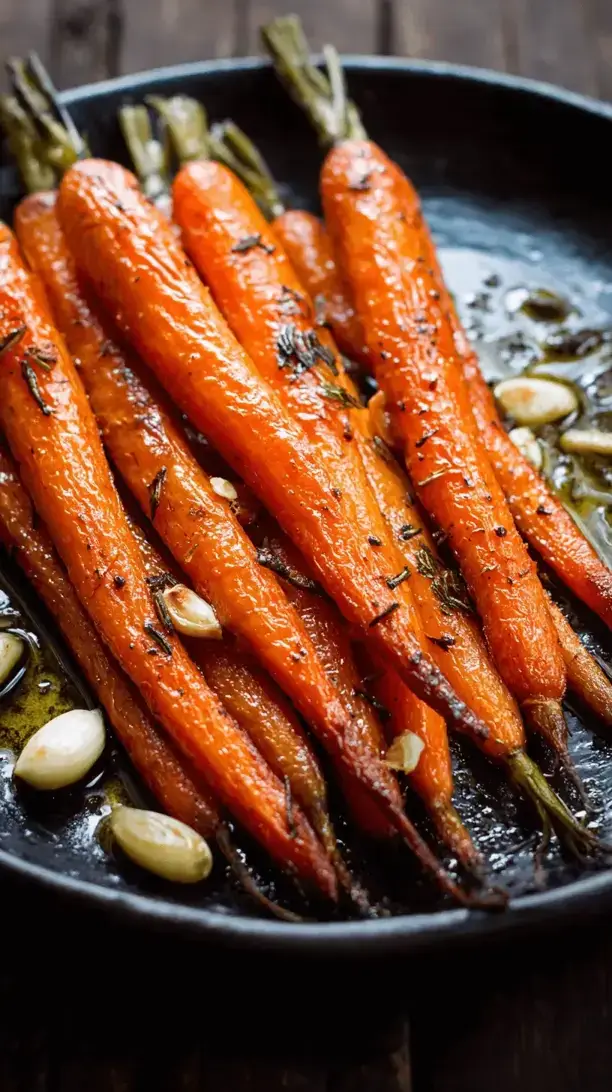
Balsamic Roasted Carrots
Transform humble carrots into an elegant side dish with this easy balsamic roasted carrots recipe. Sweet, tangy, and caramelized perfection in under 40 minutes!
Ingredients
Ingredients
-
1.5 lbs carrots (preferably similar in thickness)
-
2 tablespoons extra virgin olive oil
-
2 tablespoons good quality balsamic vinegar
-
1 tablespoon pure maple syrup or honey
-
2 cloves garlic (minced)
-
1/2 teaspoon kosher salt (plus more to taste)
-
1/4 teaspoon freshly cracked black pepper
-
fresh chopped parsley or thyme (optional for serving)
-
flaky sea salt (optional for serving)
Instructions
-
Prep the Carrots. Preheat your oven to 425°F (220°C). Line a large rimmed baking sheet with parchment paper for effortless cleanup. Scrub or peel your carrots. Now, you have a choice: you can leave smaller carrots whole, or slice larger ones on a diagonal into ½-inch to 1-inch thick pieces. The diagonal cut gives you more surface area for that delicious caramelization. Pat them completely dry with a kitchen towel—this is a small but important step for getting a good roast instead of a steam.01
-
Create the Flavor Base. In a large bowl, whisk together the olive oil, balsamic vinegar, maple syrup, minced garlic, salt, and pepper. You'll notice the mixture might not fully emulsify, and that's okay—it will all come together on the baking sheet. The smell at this stage is already incredible, a promise of the goodness to come.02
-
Coat and Arrange. Add the prepared carrots to the bowl and toss them thoroughly until every piece is evenly coated in the glossy marinade. I like to use my hands for this to make sure it's all well distributed. Pour the carrots and any remaining liquid from the bowl onto your prepared baking sheet. Spread them out into a single, uncrowded layer. This is crucial! If the carrots are piled on top of each other, they'll steam and become soggy. We want hot air to circulate freely for maximum browning.03
-
The First Roast. Place the baking sheet in the preheated oven and roast for 15 minutes. You'll start to smell the wonderful aromas of garlic and caramelizing sugar. After 15 minutes, remove the sheet from the oven. The carrots should be starting to soften and you might see some browning around the edges.04
-
Toss and Glaze. This is the key moment! Carefully toss the carrots and rotate the pan. This ensures even cooking and browning on all sides. You'll see the liquid on the pan has started to reduce. At this point, if you want an extra-glazy finish, you can drizzle another teaspoon of balsamic vinegar over the top.05
-
Finish Roasting. Return the pan to the oven for another 10-15 minutes. Keep a close eye on them during the final few minutes. You're looking for the carrots to be tender enough to easily pierce with a fork and for the balsamic glaze to be bubbling and sticky, not burnt. The edges should be caramelized and deliciously dark in spots.06
-
The Final Touch. Once the carrots are perfectly roasted, take them out of the oven. Let them rest on the pan for a minute—they'll continue to absorb the glaze. Taste one (carefully, it's hot!) and adjust with a pinch more salt if needed. Transfer to a serving platter and finish with a sprinkle of fresh herbs like parsley or thyme and maybe a pinch of flaky sea salt for a final burst of flavor and texture.07


